
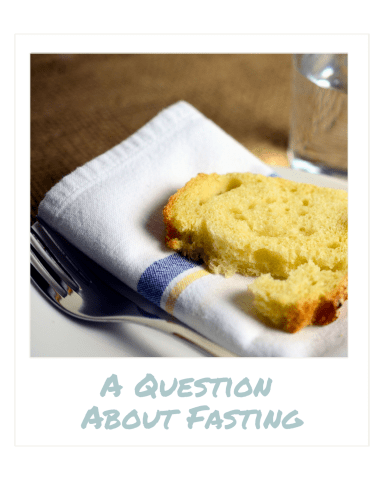
The question rises out of the crowd like steam from fresh bread: “Why don’t your disciples fast?” It’s the kind of question that doesn’t land softly. It clangs into the conversation, edged with suspicion and tradition and just enough curiosity to keep it from being an accusation. The Pharisees and the followers of John are standing nearby, probably with dust on their sandals and sweat at their temples, their faces expectant. And Jesus, seated in the middle of it all, doesn’t even flinch. He is calm, present, radiant. He looks like someone who knows a wedding is happening even when no one else hears the music yet.
The Story
In Matthew, Mark, and Luke, the moment unfolds in a blur of shared meals and strange questions. It is early in Jesus’ ministry, and everything about Him is disorienting. He eats with tax collectors, touches lepers, speaks in riddles, and reorients every system from the inside out. So when they ask Him why His followers are not fasting, it makes sense. Fasting was a symbol of devotion, of mourning, of religious rhythm. It was how people showed they were serious.
But Jesus replies with a metaphor: “Can the guests of the bridegroom mourn while he is with them?” And just like that, He reframes the whole thing. He is the bridegroom. This is a wedding. This is joy.
He talks about patching old garments with new cloth and pouring new wine into old wineskins. And if you have ever tried to force something new into a system designed for the past, you know how that ends. Stretched seams, broken bottles, disappointment.
And I can’t help but imagine the disciples in the background, watching this all unfold, still chewing the last bite of roasted fish, wondering what it means to live with someone who doesn’t just tweak the rules but transforms the whole table.
Reflection & Connection
I used to think fasting was about denial. About being holy enough to give things up, to say no, to go without. But Jesus points to something deeper. He speaks about timing, presence, and newness. About letting go of old systems when something beautiful and alive is in front of you.
It makes me think of the ways I try to squeeze new wine into old patterns. The ways I cling to old fears, old habits, old ways of measuring spiritual success. I wonder how often I miss the joy because I am too busy trying to mourn the right way.
And then there’s Max La Manna. A zero-waste chef who recently completed a seven-day hunger strike to protest the humanitarian blockade in Gaza. He fasted not out of ritual or religion, but as a living question: Why do we waste so much when so many go hungry? His fast was protest and invitation. A disruption. A plea for something new.
Jesus, too, used the absence of food to point to a bigger feast.
The Bigger Picture
Fasting is not always about absence. It can be about presence. About attention. About preparing ourselves for something that is being made new, right here, right now. Maybe it is less about checking the box of piety and more about listening for the music of the bridegroom. Maybe it is about making space for the wedding, even in the wilderness.
So I am asking myself this, and maybe you are, too: What are the old wineskins I am still clinging to, and am I willing to let them break for the sake of joy?
Gracefully yours,

Help keep the words flowing and the stories brewing.
Buy Me a Coffee
 Food and the Story
Leave a comment