
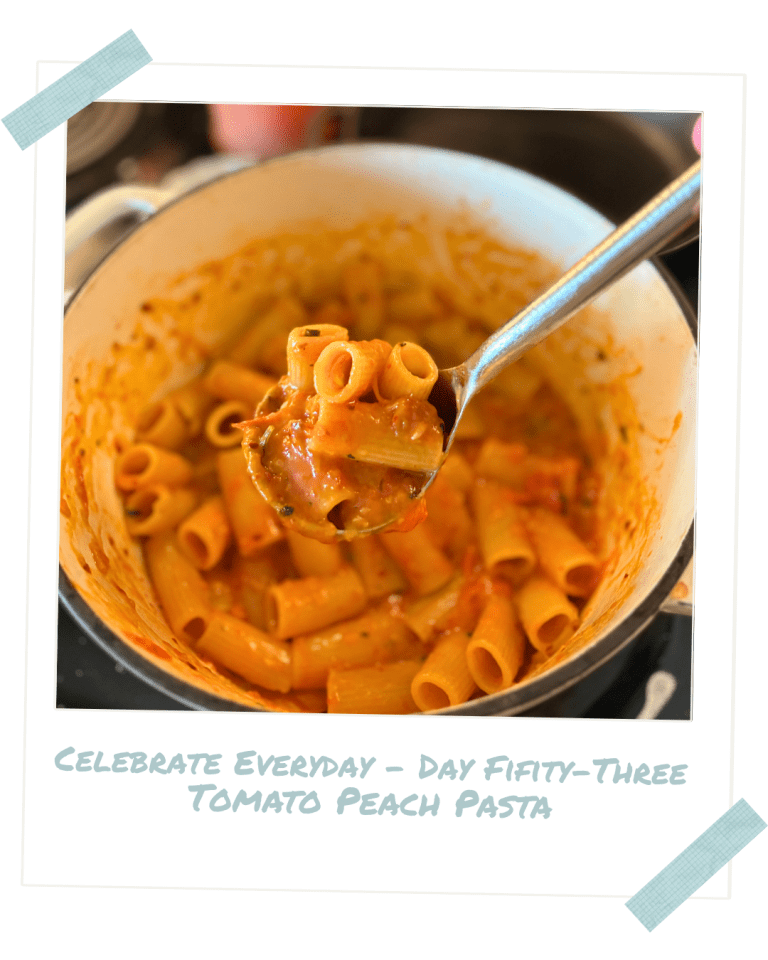
Forgiveness is a lot like making pasta sauce from scratch. At first, it’s messy; juices splattering, garlic sizzling, peaches softening beside tomatoes in a way that feels…unnatural. You stir, you wait, you smash down the bits that resist. And then, somehow, it turns into something silky, sweet, spicy, and surprisingly beautiful.
When I forgive, it rarely starts with grace. It starts with resistance. My jaw clenched, my shoulders tight, my heart whispering, they don’t deserve it. But then, somewhere between the chopping and the simmering, something shifts. The weight lightens. My grip loosens. I realize forgiveness isn’t about excusing the wrong, it’s about setting myself free.
Like peaches in pasta, forgiveness can feel odd at first. But give it time, let the flavors meld and you discover that the sweetness softens the sharp edges. Forgiveness, like sauce, is more for the one making it than the one eating it.
Tomato Peach Pasta (from Justine Snacks)
What You Will Need
- 1 pint cherry tomatoes (assorted colors), sliced in half
- 1 medium peach, cubed (about 1 cm pieces)
- 2–3 large garlic cloves, sliced or minced
- 2 sprigs fresh basil, chiffonade
- 2 tbsp Calabrian chili paste (or 2 tsp red chili flakes)
- ⅓ cup olive oil
- 16 oz rigatoni (or pasta of choice)
- 1–2 tbsp butter
- Salt & black pepper, to taste
- 1 oz fresh parmesan, for topping

What You Will Need To Do:
- Heat ⅓ cup olive oil in a medium Dutch oven over medium heat. Add 2–3 sliced garlic cloves and cook 1–2 minutes until lightly golden.
- Add 1 pint halved cherry tomatoes and 1 cubed peach. Stir to coat in oil, season with salt, and simmer for 5 minutes, stirring occasionally, until tomatoes burst. Smash with a spoon to release juices.
- Stir in 2 sprigs basil (chiffonade) and 2 tbsp chili paste (or 2 tsp flakes). Simmer 3–4 minutes until sauce thickens.
- Meanwhile, cook 16 oz rigatoni in salted water until al dente. Reserve 1 cup pasta water, then drain.
- Remove sauce from heat. Add ½ cup pasta water and blend with immersion blender until smooth. Adjust salt to taste.
- Toss sauce with drained pasta. Add 1–2 tbsp butter and stir until glossy.
- Plate and top with 1 oz grated parmesan and black pepper. Serve immediately.

Forgiveness doesn’t always look neat. It bubbles, it splatters, it takes more time than you thought you had. But when you let the sweetness and sharpness come together, what you create isn’t for the other person it’s nourishment for your own soul. When I forgive, I feel lighter. Freer. Like I’ve unclenched a fist I didn’t know I’d been holding. It doesn’t make the past disappear, but it does keep it from ruling my future.
So tell me—how does forgiving someone make you feel? What sweetness could you add to your own messy pot, to turn something bitter into something beautiful?
Gracefully yours,

Help keep the words flowing and the stories brewing.
Buy Me a Coffee
Reference
Niequist, S. (2024). Celebrate Every Day. Zondervan.
 Food and the Story
Leave a comment